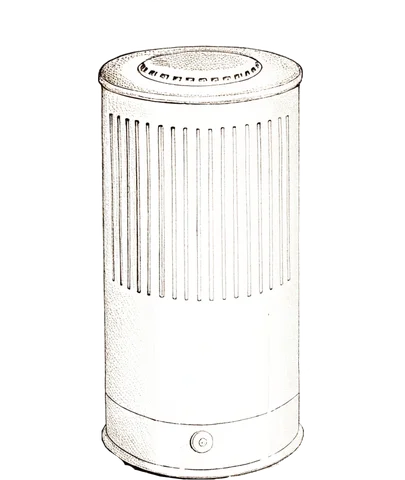
How do I keep wildfire smoke out of my house?
Close the house, filter what is already inside it, and stop adding particles of your own, in that order. A sealed home running a right-sized filter holds indoor fine particles at a small fraction of what is outside, even on a heavy smoke day. Two limits: HEPA catches the particles in smoke, not its gases, and the ash keeps mattering long after the sky clears.
What smoke does to the air inside your house
A house is not a sealed box. Outdoor air comes in three ways: through open windows and doors, through anything mechanical that pulls from outside (bathroom and kitchen exhaust fans, an HVAC fresh-air intake, some air conditioners), and through the joints, cracks, and gaps around closed windows that let air seep in on its own. How much smoke gets in depends almost entirely on which of those you have shut down. A leaky home with nothing done sits at roughly 40 to 70 percent of the outdoor fine-particle level.
A home with tight windows and door seals, and the HVAC fresh-air intake closed, sits at 5 to 15 percent. Add a filter running inside and indoor levels can stay below the WHO health-based guideline of 5 micrograms per cubic meter even while outdoors runs at 100 to 200.
That range is the whole game. A multi-day smoke episode puts outdoor fine particles at 50 to 300 micrograms per cubic meter, against a federal 24-hour standard of 35 and a health-based annual guideline of 5.
Smoke is also worse per microgram than the haze you breathe the rest of the year. In a Southern California study, wildfire fine particles were associated with a 1.3 to 10 percent rise in respiratory hospitalizations per 10 micrograms per cubic meter, against 0.67 to 1.3 percent for ordinary ambient particles. Smoke carries more reactive organics and metals. The size of the gap is still debated; the direction is not. Researchers attributed more than 50,000 premature deaths in California to wildland-fire particles between 2008 and 2018.
Step one: close the house, including the machines that let air in
Shutting the windows is the part everyone does. The parts that get missed are the machines that pull outdoor air in on purpose.
If you have central heating and air, find out whether it has a fresh-air intake. If it does, set the system to recirculate or close the outdoor damper. If you have a window air conditioner, close its outdoor air damper and make the seal between the unit and the window as tight as you can. A portable air conditioner with a single hose pushes air out of the room and pulls replacement air in from wherever it can, which during a smoke event means more smoke; use it sparingly, or use a two-hose unit with the window kit sealed well. An evaporative cooler pulls large volumes of outdoor air straight through the house, so cover the intakes with 4-inch MERV 13 filters if you can reach them safely, and otherwise leave it off.
Heat beats smoke as an immediate risk. If closing the house means you cannot stay cool, go somewhere that is both cool and filtered rather than sitting in it.
Sealing a house has a real trade-off. With no air exchange, the carbon dioxide you exhale builds up, especially in a closed bedroom overnight. Do not keep a window cracked through the smoke. Watch the outdoor number and open up when it drops, even for an hour, then close again. Take every clean window you get.
Step two: filter what already got in
Sealing decides how much arrives. Filtering decides how long it stays. You want both running, and you want them sized rather than guessed at. A true HEPA filter removes at least 99.97 percent of particles at 0.3 microns, the hardest size to catch, in a single pass.
In real rooms over real days, intervention trials find 40 to 80 percent lower fine-particle levels. The spread is mostly a sizing problem. Match the unit to the room: clean air delivery rate, in cubic feet per minute, should be at least the room's volume in cubic feet times 5, divided by 60. A 12 by 12 foot bedroom with 9 foot ceilings needs about 108 cfm. Floor-area shortcuts break on vaulted ceilings, so use the volume math.
If you have central heating and air, put in the highest-efficiency filter the system takes, MERV 13 if it fits, and set the fan to On rather than Auto so it keeps circulating air through the filter. A MERV 13 filter removes 80 to 90 percent of fine particles per pass, and running the fan continuously turns your ductwork into a whole-house filter. Check with an HVAC technician before upgrading a system built before 2000 or one with a marginal blower.
Pick one room to protect properly rather than treating the whole house evenly. The bedroom is usually the right choice, because it covers the third of the day you are asleep and it is the easiest room to keep closed.
If a commercial unit is not available or not affordable, EPA's stated fallback is a do-it-yourself cleaner: MERV 13 furnace filters taped to a box fan. Their guidance is specific about the terms. It is a temporary substitute, not a permanent one, and performance varies with how well each one is built. Use a box fan from 2012 or later with a UL or ETL safety mark, and do not run one unattended overnight.
During heavy smoke, filters load up fast. Change them when they look dirty or start smelling like smoke, which can mean every few weeks, sometimes every few days.
What does not work, and what makes it worse
Anything sold as an ionizer, plasma cleaner, or ozone generator is a hard no, smoke event or not. They produce ozone, which is itself a lung irritant and a component of smog, and the reaction byproducts can be worse than what the device claims to remove. Air-purifying plants, charcoal bags, and salt lamps do nothing measurable for fine particles in a real room.
A HEPA filter is a particle tool. It does not remove the gas-phase part of smoke, which is where the smell lives, and it does nothing about carbon monoxide. A unit with a real activated carbon stage, measured in pounds of media rather than a carbon-dusted prefilter, handles part of the gas fraction. No filter fixes a house that is still letting smoke in.
An N95 respirator is the right tool outdoors and during ash cleanup. Indoors it is a poor substitute for filtration, because it protects one person for as long as they can stand wearing it, while a filter protects everyone in the room continuously.
The last one is the easiest to miss: during a smoke event your own house is a particle source too. Frying and broiling, candles, incense, a wood-burning stove or fireplace, aerosol sprays, smoking and vaping, and vacuuming without a HEPA vacuum all add fine particles on top of what came in from outside. Hold off on all of it until the air clears.
After the smoke clears, the ash is the long half
Public messaging treats a smoke event as something with an end date. The exposure does not work that way. Ash settles on roofs, in attic insulation, in HVAC ductwork, in yards, and on outdoor furniture, and it keeps re-entering indoor air for months to years afterward, stirred up by cleaning, foot traffic, the HVAC running, wind, and rebuilding nearby. Thorough surface cleaning does more for post-fire indoor air than ventilation does.
The visible part of ash is mostly the coarse fraction, larger particles you can see on a car hood or a windowsill. That is useful: it tells you where deposition happened. The fraction you cannot see is the one that reaches deep into the lungs, and both respond to the same cleaning.
Clean wet, never dry. Mist hard surfaces with a little water before sweeping, then wet-mop. Use a damp cloth on lightly dusted areas. Dry sweeping and leaf blowers put the ash you were trying to remove straight back into the air. Use a HEPA vacuum, not an ordinary one. Change the HVAC filter early rather than on schedule. Take shoes off at the door and keep doormats clean so ash does not get tracked through the house.
For cleanup itself, wear gloves, long sleeves, long pants, and an N95, and change clothes and shoes before leaving the work area. Children, older adults, and anyone with heart or lung disease should not do ash cleanup at all.
If a fire burned close enough to leave ash on your property, the attic, the ductwork, and the roof are worth a professional cleaning rather than a weekend.
Where do I start?
- Look up the current outdoor fine-particle number for your area on AirNow before you decide anything, and check it again through the day.
- Close windows and doors, then set central heating and air to recirculate or close the fresh-air intake damper.
- Close the outdoor damper on any window air conditioner, and leave an evaporative cooler or single-hose portable AC off unless you have sealed or filtered its intake.
- Fit the highest-efficiency filter your HVAC accepts, MERV 13 if it fits, and switch the fan from Auto to On so it runs continuously.
- Run a true HEPA unit in the room where you sleep, sized so its CADR is at least room volume in cubic feet times 5, divided by 60.
- Stop adding particles indoors: no frying, candles, incense, wood fires, aerosol sprays, or vacuuming without a HEPA vacuum until it clears.
- Open the windows whenever the outdoor number drops, even briefly, to flush out the carbon dioxide a sealed house builds up.
- Once the smoke passes, damp-wipe and wet-mop rather than dry-sweep, change filters early, and keep kids out of the ash cleanup.
What does the science say?
What actually works?
How do the options compare?
Common questions
Does closing the windows actually keep wildfire smoke out?
Partly, and only if you close the rest of it too. Closed windows and door seals with the HVAC fresh-air intake shut bring indoor fine particles to roughly 5 to 15 percent of outdoor levels, against 40 to 70 percent in a leaky home with nothing done. What defeats it is a machine still pulling outdoor air in: a fresh-air intake left open, an evaporative cooler, a window AC with its damper open, or a single-hose portable AC.
Do air purifiers work for wildfire smoke?
For the particle part, which is most of the health risk, yes. A true HEPA unit removes at least 99.97 percent of the hardest-to-catch particle size per pass, and trials find 40 to 80 percent lower room levels when the unit is sized to the room and left running. It does not remove the gases in smoke, which is why the smell can linger in a room that is measurably clean. Only a substantial activated carbon stage touches that fraction.
What air quality number should I act on?
Treat any confirmed smoke event as a reason to close and filter rather than waiting for a threshold. The health-based reference is a WHO annual guideline of 5 micrograms per cubic meter of fine particles; the federal 24-hour standard is 35. Smoke events routinely run 50 to 300. There is no level the research finds safe, so the target is as low as you can hold your own rooms.
Does rain help with wildfire smoke air quality?
Usually yes, outdoors. Rain washes particles out of the air and outdoor levels tend to drop during and after it. It does not clean the air already inside your house, so keep the filter running, and it does not solve deposited ash. Wet ash stops becoming airborne while it is damp and can be stirred up again once it dries, so rain is a good moment to clean rather than a reason to skip it.
Should I wear a mask inside my house during a smoke event?
Outdoors and for ash cleanup, an N95 is the right tool. Indoors, seal and filter instead. A mask covers only one face, and only while it stays on correctly. If indoor air is bad enough that a mask feels necessary at home, the real problem is that smoke is still getting in or is not being filtered out.
How long does wildfire smoke stay in a house?
The airborne part clears within hours to a day or two once outdoor levels fall and you air the house out with a filter running. The ash is the longer story. Ash deposited in attics, ducts, yards, and on roofs keeps re-entering indoor air for months to years, stirred up by cleaning, the HVAC running, foot traffic, and wind. Surface cleaning matters more there than ventilation does.
Sources cited on this page
Every number on this guide page traces to one of the 7 sources below: 2 peer-reviewed, 3 government or regulatory.
Peer-reviewed
Government & regulatory
Institutional & standards
- World Health Organization, Global Air Quality Guidelines, 2021 (annual 5 µg/m³)
- AHAM, Clean Air Delivery Rate (CADR) standard and room-sizing rule for air cleaners
More guides like this one
Curious what you are breathing at home?
Get your free Stasis Score from just your address