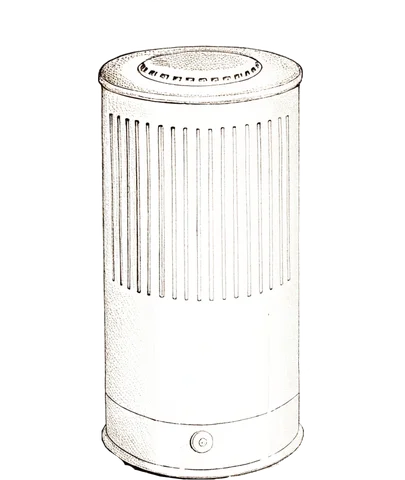
Do I need an air purifier?
An air purifier helps if your problem is airborne particles: cooking smoke, wildfire haze, traffic soot, pollen, or pet dander. A real HEPA unit sized to the room removes most of that. It does nothing for gases like paint fumes or off-gassing, and it does not fix the source making the mess. Buy one for a particle problem, match it to the room, skip anything that promises to clean everything.
What a HEPA filter does, and what it cannot touch
A true HEPA filter pulls more than 99.9 percent of fine particles out of the air that passes through it. Run one sized to the room and you cut the floating particle load by roughly 40 to 80 percent across a day, which is the range intervention trials measure. That covers the real concerns: fine particles (PM2.5) from cooking, wildfire smoke, and traffic, plus pollen and pet dander. Where people waste money is assuming it does more. A HEPA filter captures particles only. It does not remove gases, so the smell of fresh paint, cleaning sprays, or fumes from an attached garage passes straight through it. Those need activated carbon, a different filter media, or better yet source control. And a purifier never fixes the thing making the mess. If your gas stove or frying pan is the source, the filter is mopping the floor with the tap still running. Ventilation comes first, the filter second.
What a purifier will not fix: mold, radon, CO2, and gas-stove gases
Mold: a HEPA filter captures the spores floating in the air, which helps during and right after a cleanup, but it does nothing about the wet material producing them. The fix is finding and drying the moisture source within a day or two, then removing the growth. Radon: a radioactive gas that seeps up from the soil, and no air filter removes a gas. The fix is sub-slab depressurization, a vent pipe and fan that pull the gas from under the foundation and send it above the roof, which the EPA puts at 80 to 99 percent reduction. CO2: a ventilation reading that climbs when a closed room fills with the air people breathe out. The only fix is more outdoor air, an open door or window, or mechanical ventilation. Gas-stove gases: a range hood vented outdoors handles the nitrogen dioxide and other combustion gases, while the purifier catches only the fine particles that come with them.
So do you need one? It depends on what is in your air
Three cases call for a purifier. You cook often and your range hood is weak or just recirculates air back into the kitchen, so cooking particles build up and linger for hours. You live where wildfire smoke or heavy traffic loads the outdoor air, and you need the indoor air held clean on bad days with the windows shut. Or someone in the home reacts to pollen or a pet you are keeping, and you want the airborne allergen load down without ripping out the carpet or rehoming the animal. If none of those fit, a purifier may be solving a problem you do not have. The way to know is to measure: a particle sensor tells you whether your air carries a particle load worth filtering, or whether your real issue is gases or stale ventilation that a HEPA box will not move.
If you buy one, size it to the room
The number that matters is clean air delivery rate, or CADR, printed on the box. It measures how much clean air the unit pushes into the room. A high filter grade means little if the unit moves too little air to keep up with the space. A purifier rated for a 200 square foot room does little in a 400 square foot open living area. A rough rule: pick a CADR of at least two-thirds the room's floor area in square feet, which keeps the air turning over often enough to matter. The bedroom is the highest-value single place to run one, since that is where you spend eight unbroken hours breathing the same air. The bedroom is where one well-sized unit earns its keep. The full sizing math is on the HEPA purifier method page.
Where do I start?
- Before buying anything, run the kitchen exhaust fan every time you cook and crack a window. Venting the source out beats filtering it after, and it is free.
- Open a window or the bedroom door when outdoor air is clean to flush stale air. A purifier is for the times you cannot do this, like smoke or high-pollen days.
- Figure out what your problem really is. If it is paint smell, off-gassing, or garage fumes, those are gases, and a plain HEPA filter will not help. Source control and ventilation come first.
- If you do buy one, match the CADR rating on the box to your room size and put it in the bedroom first.
- Change the filter on the schedule the maker lists. A clogged filter quietly stops working long before it looks dirty.
What does the science say?
What actually works?
Common questions
Do air purifiers really work?
A real HEPA purifier works for particles, and the evidence is solid. Run one sized to the room and it removes most of the floating fine particles, pollen, and pet dander. What it does not do is remove gases, odors, or the source making them, which is where the marketing oversells. The answer is yes for the right problem. If your issue is particles, a HEPA filter removes most of them. If your issue is gases or stale air, it will not move it, and a sensor is what tells you which one you have.
Is my air filter actually doing anything?
Two things decide that: whether it is a true HEPA filter, and whether it is sized to the room. A small unit in a large open space barely moves the air. Check the CADR rating against your room's floor area, and check that the filter is not clogged, since a dirty filter quietly stops working before it looks dirty. The clearest proof is a particle sensor: watch the number drop when the unit runs and climb when it is off. If nothing changes, the unit is too small, the filter is spent, or your problem was never particles.
Does a HEPA filter remove odors and gases?
No. HEPA captures particles only, so gases pass straight through, along with the smells that come with them: fresh paint, cleaning sprays, off-gassing furniture, garage fumes. Removing gases takes activated carbon, a separate filter media, and even then source control and ventilation do most of the work. If a unit claims to handle both, look for a real carbon stage measured in pounds, not a thin coated screen.
Will an air purifier fix my cooking smoke?
It helps, but it is the second move, not the first. The first move is venting the cooking particles out with a range hood that exhausts outdoors. If your hood just recirculates air back into the kitchen, or you have no hood, a well-sized HEPA unit in the open kitchen area catches what the ventilation misses. Filtering without venting is mopping with the tap still running.
Do air purifiers help with mold?
A HEPA purifier captures mold spores from the air, so it helps during and after a cleanup and while you track down a hidden leak. It does nothing about the wet material feeding the mold, though. Spores need roughly 24 to 48 hours of sustained moisture on a surface to grow, so the real fix is finding and drying the water source, then removing the growth. Run a purifier and skip the moisture fix and the colony keeps shedding. Air filtration is a complement to fixing the water, never a substitute.
Do air purifiers help with radon?
No. Radon is a radioactive gas that seeps up from the soil, and a HEPA filter captures only particles, so the gas passes straight through. The proven fix is sub-slab depressurization: a contractor runs a vent pipe through the slab with an inline fan that pulls the gas from under the foundation and exhausts it above the roof, which the EPA credits with an 80 to 99 percent reduction. Sealing cracks alone is not enough. If radon is the concern, test first, then mitigate, because a purifier is the wrong tool.
Do air purifiers help with CO2?
No. CO2 is not a particle and no consumer filter removes it. It is really a ventilation signal: the number climbs when a closed room fills with the air people breathe out, which is common in a tight modern bedroom overnight. The only fix is more outdoor air, so open the bedroom door or crack a window when outdoor air is clean, or use mechanical ventilation. A HEPA unit moving air around the room helps mixing but does not lower the CO2.
Do air purifiers help with a gas stove?
Partly. A gas stove puts out two different things: fine particles (PM2.5) and combustion gases like nitrogen dioxide. A HEPA purifier catches the particles but not the gases. The right fix for the gases is a range hood that vents outdoors, run every time you cook, since ventilation removes the source instead of chasing it afterward. Use the purifier as backup for the particles a weak or recirculating hood misses, not as the primary control.
Are ionizers and ozone air purifiers worth it?
No, and some are worse than nothing. Ozone generators produce ozone, a lung irritant, and the byproducts of the reactions can be more harmful than what they claim to remove. Photocatalytic and so-called plasma units can generate formaldehyde and other byproducts. Stick to mechanical HEPA filtration, which physically traps particles with no chemistry and no ozone. The methods pages cover the traps to avoid in detail.
Do home air purifiers really make a difference?
A HEPA purifier sized to the room cuts that room's fine-particle load by roughly 40 to 80 percent across a day, which is the range intervention trials measure. The difference is real and it is confined to particles: cooking smoke, wildfire haze, traffic soot, pollen, pet dander. Gases pass straight through, and no purifier touches the source making the mess. Undersized units are where the difference disappears.
Do I really need an air purifier in my room?
The bedroom is the highest-value single place to run a purifier, because it covers the roughly eight unbroken hours you spend breathing the same air asleep. Whether you need one at all is worth measuring rather than guessing. A particle sensor reads the room's fine-particle load over time and shows whether it is high enough to filter. If the real problem is gases or stale air, a purifier in that room will not move it.
What are signs you need an air purifier?
Fine particles, the PM2.5 soot and smoke small enough to reach deep into the lungs, are invisible and close to odorless, so there are no reliable sensory signs to wait for. What does point at a problem: frequent cooking under a weak or recirculating range hood, wildfire smoke or heavy traffic outside, or someone in the house reacting to pollen or a pet. A particle sensor settles it against the WHO annual guideline of 5 µg/m³, micrograms per cubic meter.
Is it overkill to have an air purifier in every room?
One correctly sized purifier in the bedroom beats three underpowered ones scattered through the house. A unit only cleans the room it sits in, so a second one earns its place only where someone spends hours at a time with the door shut. Sizing decides the rest: the AHAM rule of thumb puts clean air delivery rate at two-thirds of the room's floor area in square feet, and a unit under that never catches up.
Is there a downside to using an air purifier?
Four real ones. Filters cost money on a schedule, and a clogged filter quietly stops working before it looks dirty. An undersized unit runs constantly and never catches up to the room. Models that ionize or generate ozone make the air worse, which is why California banned ozone generators sold as air cleaners in 2010 under AB 2276. The largest downside is false reassurance: a purifier does nothing for radon, carbon dioxide, or gas-stove combustion gases.
Sources cited on this page
Every number on this guide page traces to one of the 5 sources below: 4 government or regulatory.
More guides like this one
Curious what you are breathing at home?
Get your free Stasis Score from just your address